Stainless Steel In Malaysian Restaurants: Why Commercial Kitchen Equipment Rusts And 7 Causes Owners Often Miss
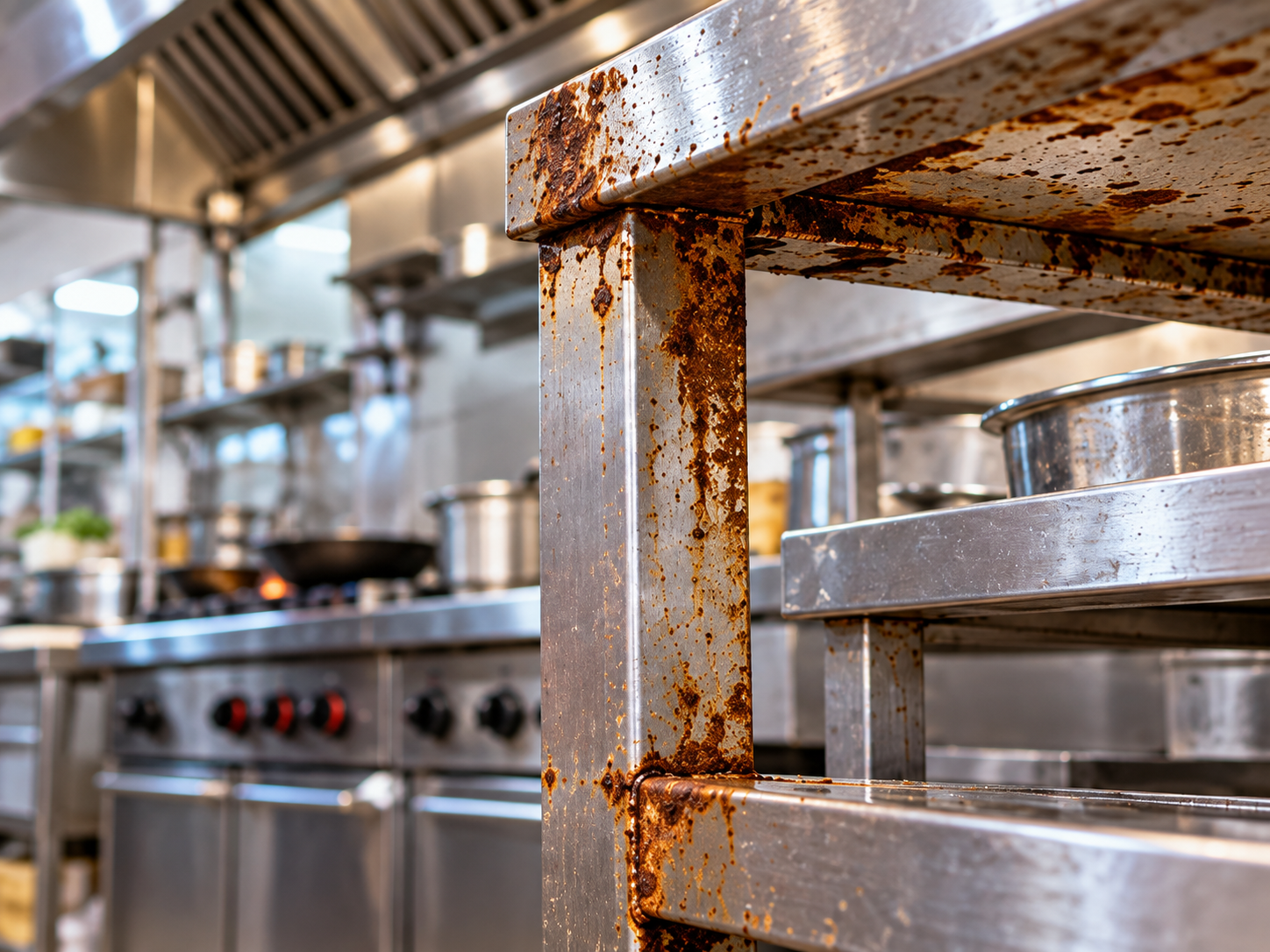
Stainless steel is widely used in professional kitchens because it is durable, easy to clean and resistant to corrosion. Resistant, however, does not mean completely rust-proof.
For restaurants in Malaysia using stainless steel, the operating environment can be demanding. High humidity, constant washing, salt, acidic ingredients, cooking vapours and strong cleaning chemicals can all affect stainless-steel surfaces over time.
Rust is not always evidence that the equipment itself is defective. In many cases, corrosion begins because the protective surface of the steel has been damaged, contaminated or repeatedly exposed to unsuitable conditions.
Understanding why rust develops can help restaurant operators protect their commercial kitchen equipment, reduce premature replacement costs and maintain cleaner working surfaces.
1. Why Stainless Steel In Malaysian Restaurants Can Still Rust
Stainless steel contains chromium, which reacts with oxygen to form an extremely thin protective oxide layer on its surface. This passive layer helps protect the metal underneath from corrosion.
When the layer is damaged, it can normally reform when sufficient oxygen is available. Problems arise when contaminants, chemicals or prolonged moisture interfere with this protection.
This is particularly relevant in a stainless steel restaurant in Malaysia, where equipment may be exposed to heat, steam and moisture for many hours each day.
Not all stainless steel is identical. Different grades contain different combinations of elements and offer different levels of corrosion resistance.
That is why restaurant owners should ask suppliers about the material used rather than assuming every product labelled “stainless steel” will perform the same way.
2. Commercial Kitchen Equipment Can Corrode When Chlorides Remain On The Surface
Salt is one of the most common substances found in restaurant kitchens, and chlorides can be aggressive toward stainless steel when allowed to remain on its surface.
Saltwater, sauces, marinades, food residue and certain cleaning chemicals can all contain chlorides.
Problems become more likely when these substances remain on commercial kitchen equipment for extended periods, particularly around joints, corners and areas where moisture collects.
For example, a preparation table may appear clean after service while salty liquid remains underneath containers or around raised edges.
Regular cleaning followed by thorough rinsing and drying reduces prolonged exposure. Operators working with salty ingredients should pay particular attention to splash zones, preparation areas and equipment located close to washing stations.
3. The Wrong Cleaning Chemicals Can Damage Stainless Steel Restaurant Equipment In Malaysia
Stronger does not always mean cleaner.
Highly aggressive chemicals can damage stainless-steel surfaces when used incorrectly. Products containing high concentrations of chlorine or other unsuitable compounds can contribute to staining, pitting and corrosion.
A Malaysian restaurant using stainless steel may require frequent cleaning because of grease, oil and heavy food preparation, but cleaning products should still be selected according to the equipment manufacturer’s instructions.
Chemical concentration matters as well.
Using more detergent or disinfectant than recommended does not necessarily improve hygiene. In some situations, it simply increases chemical exposure.
After cleaning, surfaces should normally be rinsed appropriately so that chemical residue does not remain in prolonged contact with the steel.
Restaurant operators should also train cleaning staff on correct dilution and application rather than relying on visual estimates.
4. Commercial Kitchen Equipment Can Rust Because of Cross-Contamination From Other Metals
Sometimes visible rust doesn’t initially come from the stainless steel itself.
Particles from ordinary carbon steel can become embedded in a stainless-steel surface and begin to rust.
This can happen when unsuitable wire brushes, steel wool, or tools previously used on carbon steel are used to clean commercial kitchen equipment.
Small iron particles left behind may corrode and create the appearance that the stainless steel has started rusting.
This is one reason dedicated cleaning tools are important.
Avoid using conventional steel wool or harsh metal brushes unless the equipment manufacturer specifically approves them. Store cleaning tools properly so they don’t become contaminated by other workshop or maintenance materials.
Small changes in cleaning procedures can prevent unnecessary surface damage.
5. Stainless Steel Surfaces In Malaysian Restaurants Should Not Stay Wet For Long Periods
Commercial kitchens naturally contain water.
Sinks, preparation areas, refrigeration equipment, floors and washing stations can expose stainless steel to frequent moisture. In Malaysia’s humid environment, drying can also take longer in poorly ventilated areas.
For stainless steel in Malaysian restaurants, the problem is often not occasional contact with water. It is moisture remaining trapped against the surface.
Water can collect:
- Under containers
- Behind equipment
- Around seams
- Beneath rubber mats
- Along sink edges
- Around joints and fittings
If that moisture also contains food residue, salt or cleaning chemicals, corrosion risk can increase.
Drying work surfaces after cleaning and inspecting normally hidden areas should therefore form part of routine kitchen maintenance.
6. Commercial Kitchen Equipment Can Be Damaged By Scratches And Abrasive Cleaning
Deep scratches do more than affect appearance.
Aggressive scrubbing pads, metal scrapers and abrasive cleaning methods can damage the finish of stainless-steel surfaces. Scratches may also create small areas where food residue and chemicals are more difficult to remove.
When maintaining commercial kitchen equipment, staff should use cleaning materials recommended for the surface.
The direction of cleaning can also matter on visibly brushed stainless-steel finishes. Following the grain generally produces a more consistent result and reduces visible scratching.
Cutting directly on stainless-steel worktables should also be avoided where suitable cutting boards are intended for food preparation.
A commercial work surface is built for demanding use, but unnecessary physical damage can shorten its useful appearance and make cleaning more difficult.
7. Stainless Steel Equipment In Malaysia Restaurants Can Suffer When Maintenance Is Neglected
Minor staining is easier to address than established corrosion.
One problem in busy kitchens is that operators ignore small signs of deterioration until they become difficult to remove.
Restaurant operators should periodically inspect stainless-steel surfaces for:
- Discolouration
- Rust spots
- Scratches
- Damaged weld areas
- Loose joints
- Persistent moisture
- Chemical residue
- Areas collecting grease or food debris
In Malaysian restaurants using stainless steel, these checks are especially useful around wet preparation stations, washing areas, and cooking lines where surfaces see heavy daily use.
Early investigation also helps determine whether a mark is simple surface contamination or evidence of a more significant problem requiring professional attention.
Protect Your Commercial Kitchen Equipment With Proper Care And The Right Supplier
Good stainless-steel equipment is an investment, and its service life depends on both manufacturing quality and daily care.
Cleaning correctly, avoiding unsuitable chemicals, reducing chloride exposure, preventing metal contamination and addressing damage early can help protect commercial kitchen equipment from premature deterioration.
Material selection matters too. Different kitchen applications place different demands on worktables, sinks, cabinets, racks and other fabricated components. Restaurant owners should therefore discuss intended use with an experienced commercial kitchen supplier rather than buying based solely on appearance or price.
Early investigation also helps determine whether a mark is simple surface contamination or evidence of a more significant problem requiring professional attention.
Choose VChoose For Commercial Kitchen Equipment You Can Depend On
At VChoose, we know that restaurant equipment needs to withstand daily cleaning, heat, moisture and demanding food preparation.
We support Malaysian F&B operators with commercial kitchen equipment and customised stainless-steel fabrication designed around real commercial use.
When you work with us, you gain access to decades of combined industry experience, free consultation and quotation, site visits, custom stainless-steel fabrication, equipment installation support, competitive pricing, nationwide dealer coverage and after-sales repair and maintenance services.
We also provide a one-year equipment warranty, giving you added confidence after your purchase.
Whether you are setting up a new restaurant in Malaysia with stainless steel, replacing ageing equipment or looking for a more dependable stainless-steel solution, our team can help you choose equipment suited to your operation.
Speak to VChoose today, and let us help you build a commercial kitchen made for daily use, easier to maintain, and supported beyond installation.